Weather Station Vs Weather App
Weather stations and weather apps serve the same fundamental purpose: to provide weather information. However, they differ significantly in terms of data accuracy, user experience, and functionality. A weather station, such as the Ambient Weather WS-2902, gives you real-time, hyper-local data collected from your own backyard, while weather apps rely on data from various sources, which may not always reflect your immediate environment.
For individuals or businesses that require precise weather conditions for activities like gardening, farming, or outdoor events, a weather station can be invaluable. Conversely, for casual users who just want a general idea of the weather, a weather app may suffice.
Disclosure: As an Amazon Associate I earn from qualifying purchases at no cost for you.
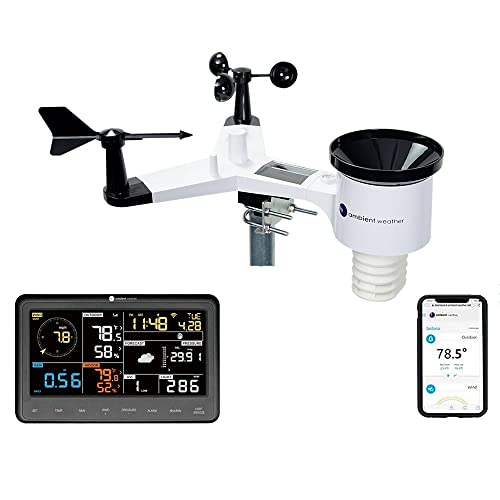
- COMPLETE WEATHER STATION: (1) Osprey Sensor Array with Rain Cup, and (1) Brilliant, Easy…
- AUTHENTIC HYPER-LOCAL DATA: Monitor your actual home and backyard weather conditions wit…
- SMART HOME READY: Set up alerts, access your data remotely, and program your home based …
Why This Matters
Understanding the differences between weather stations and weather apps can greatly influence your decision on which to use. In many cases, the choice hinges on the level of detail and accuracy you need. Weather stations offer precise readings for temperature, humidity, wind speed, and more, directly from your location. Weather apps, while convenient, may lack the specificity needed for more serious applications.
For instance, a gardener may rely on a weather station for accurate rainfall data, while a hiker might prefer a weather app for its portability and ease of access to forecasts.
Key Benefits
**Weather Stations:**
– **Hyper-local Data:** Devices like the Ambient Weather WS-2902 provide real-time updates from your property, ensuring the data is relevant to your immediate conditions.
– **Comprehensive Monitoring:** Many weather stations measure various parameters, including UV intensity and solar radiation, which can be important for outdoor activities.
– **Smart Home Integration:** Many models allow you to connect with smart home systems, enabling automation based on weather changes.
**Weather Apps:**
– **Convenience:** Weather apps are easily accessible on smartphones, making it simple to check the weather on-the-go.
– **User-Friendly Interface:** Most apps offer intuitive designs and a range of features such as radar maps and alerts for severe weather.
– **Cost-Effective:** Most weather apps are free or come with minimal subscription fees.
Common Drawbacks & Limitations

- COMPLETE WEATHER STATION: (1) Osprey Sensor Array with Rain Cup, and (1) Brilliant, Easy…
- AUTHENTIC HYPER-LOCAL DATA: Monitor your actual home and backyard weather conditions wit…
- SMART HOME READY: Set up alerts, access your data remotely, and program your home based …
**Weather Stations:**
– **Initial Setup and Maintenance:** Installing a weather station can require some technical skill, and ongoing maintenance may be necessary for optimal performance.
– **Cost of Equipment:** While not discussing prices, it’s worth noting that weather stations typically require an upfront investment for the hardware.
– **Limited Range:** The effectiveness of a weather station can diminish if placed too far from the sensor array or in a location with obstructions.
**Weather Apps:**
– **Data Accuracy:** Apps may not always provide the most accurate data for your specific location, relying instead on nearby weather stations or general forecasts.
– **Dependence on Internet Connectivity:** Weather apps require a stable internet connection to retrieve updates, which may be a limitation in remote areas.
– **Lack of Advanced Features:** Casual weather apps may not measure specific metrics that serious users need, like soil moisture or UV levels.
What to Look For (Buyer’s Checklist)
When considering which option is best for you, keep the following factors in mind:
**For Weather Stations:**
– **Sensor Variety:** Look for stations that measure multiple weather variables, such as wind speed, rainfall, and UV exposure.
– **Smart Features:** Check if the device offers smart home integration and remote access through an app.
– **Display Quality:** A clear, easy-to-read display is essential for quick data interpretation.
**For Weather Apps:**
– **User Ratings:** Research user reviews to find apps with high ratings for reliability and ease of use.
– **Features and Functionality:** Look for apps that offer radar maps, severe weather alerts, and customizable notifications.
– **Offline Access:** Some apps allow users to save data for offline viewing, which can be useful in areas with poor connectivity.
How to Choose for Your Situation
If you are a hobbyist or someone who enjoys outdoor activities, a weather app may be sufficient for your needs. However, if your work or hobbies require precise weather data, investing in a weather station would be more beneficial. Consider your location, the type of activities you engage in, and how critical accurate weather data is to those activities.
For example, farmers may prioritize weather stations for their precise data on rainfall and temperature, while travelers may rely more on weather apps for quick updates on the go.
Care, Safety, and Longevity Tips
To ensure the longevity and effectiveness of your weather station, consider the following:
– **Regular Calibration:** Periodically calibrate your weather station to maintain data accuracy.
– **Proper Placement:** Install the sensor array in a location free from obstructions like trees or buildings to get the best readings.
– **Weatherproofing:** Ensure that all components are designed to withstand local weather conditions, particularly rain and snow.
For weather apps, keep your device updated to ensure compatibility with the latest features and improvements. Additionally, be mindful of battery usage if you’re using an app that requires GPS for location tracking.
Recommended Picks
When it comes to weather stations, the Ambient Weather WS-2902 stands out for its comprehensive features and smart home integration. The VEVOR 7-in-1 model also offers a wide range of measurements and an easy-to-read display, making it ideal for both indoor and outdoor monitoring. For those seeking a user-friendly experience, the Sainlogic Smart WiFi Weather Station offers AI-driven alerts and a clear display, catering to both beginners and seasoned users.
On the app side, many popular options provide radar maps and customizable alerts, allowing users to stay informed without the need for expensive hardware. Look for apps that offer additional features like long-term weather trends and historical data for thorough analysis.
FAQ
**Q1: Can I use a weather station indoors?**
A1: Yes, many weather stations can be used indoors, but their sensors are designed for outdoor conditions to capture accurate weather data.
**Q2: How often do weather apps update their data?**
A2: Most weather apps update their data every few minutes, but this can vary based on the app and the data source.
**Q3: Is it difficult to install a weather station?**
A3: Installation can vary in complexity, but most modern weather stations come with user-friendly guides to assist with setup.
**Q4: Can I access my weather station data remotely?**
A4: Many weather stations offer remote access through associated apps, allowing you to monitor conditions from anywhere with an internet connection.
**Q5: Are weather apps reliable?**
A5: While weather apps are generally reliable, the accuracy can vary based on the data sources they use. For localized conditions, a personal weather station may provide better accuracy.

- 7-in-1 Outdoor Sensor: Monitor temperature, humidity, rainfall, wind speed, direction, s…
- 7.5-Inch Large Display: Enjoy a crystal-clear view of all your weather data with our wir…
- Long Transmission Distance: The outdoor sensor features 492 ft (150 m) transmission dist…
Conclusion
Choosing between a weather station and a weather app ultimately depends on your specific needs. For those requiring detailed, hyper-local weather data, a weather station is the superior choice. On the other hand, for casual users seeking convenience, a weather app may be sufficient. By understanding the benefits, limitations, and key features of both options, you can make an informed decision that best suits your lifestyle and requirements.
Popular Picks to Compare
- COMPLETE WEATHER STATION: (1) Osprey Sensor Array with Rain Cup, and (1) Brilliant, Easy…
- AUTHENTIC HYPER-LOCAL DATA: Monitor your actual home and backyard weather conditions wit…
- SMART HOME READY: Set up alerts, access your data remotely, and program your home based …

- 7-in-1 Outdoor Sensor: Monitor temperature, humidity, rainfall, wind speed, direction, s…
- 7.5-Inch Large Display: Enjoy a crystal-clear view of all your weather data with our wir…
- Long Transmission Distance: The outdoor sensor features 492 ft (150 m) transmission dist…
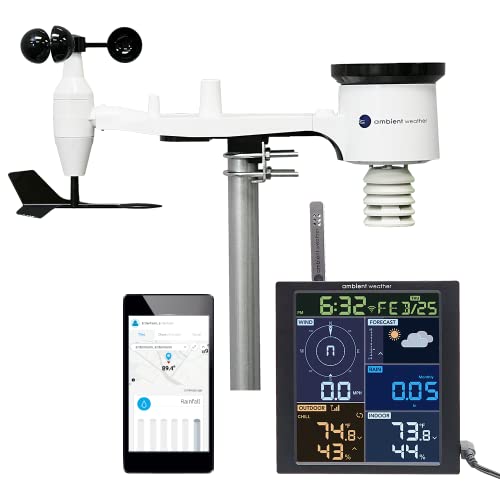
- COMPLETE WEATHER STATION: (1) All-in-one Sensor array and (1) Color LCD Display
- ALL-IN-ONE SENSOR ARRAY: Reliably measures temperature, humidity, barometric pressure, w…
- SMART HOME READY: Set up alerts, access your data remotely, and program your home based …
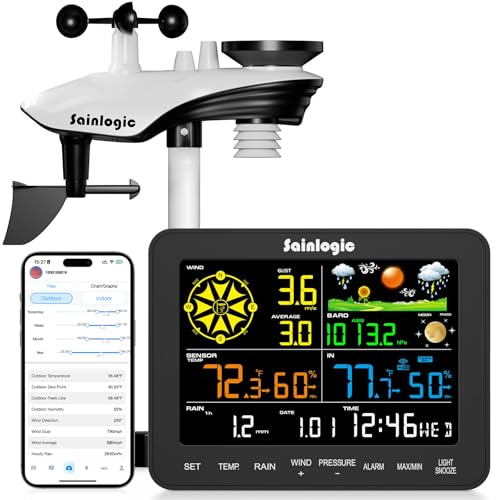
- 𝗪𝗶𝗙𝗶 + 𝗪𝗲𝗮𝘁𝗵𝗲𝗿𝘀𝗲𝗲𝗱 𝗔𝗽𝗽 + 𝗔𝗹𝗲𝗿𝘁𝘀: Connect via WiFi to our Weatherseed app for AI-driven 2…
- 𝗖𝗹𝗲𝗮𝗿 𝗗𝗶𝘀𝗽𝗹𝗮𝘆 𝗘𝗮𝘀𝘆 𝗥𝗲𝗮𝗱𝗶𝗻𝗴: This weather station is designed for effortless viewing, fea…
- 𝗨𝗽 𝘁𝗼 𝟮-𝗬𝗲𝗮𝗿 𝗗𝗮𝘁𝗮 𝗦𝘁𝗼𝗿𝗮𝗴𝗲 & 𝗗𝗼𝘄𝗻𝗹𝗼𝗮𝗱: Supports storing and downloading 2-year of compreh…
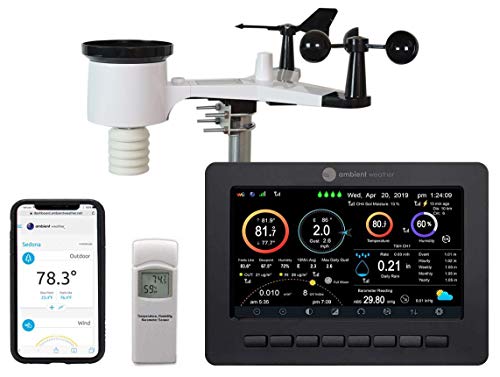
- Allows you to monitor your home and backyard weather conditions with TFT color display
- Wireless all-in-one integrated sensor array measures wind speed/direction, temperature, …
- Supports both imperial and metric units of measure with calibration available
